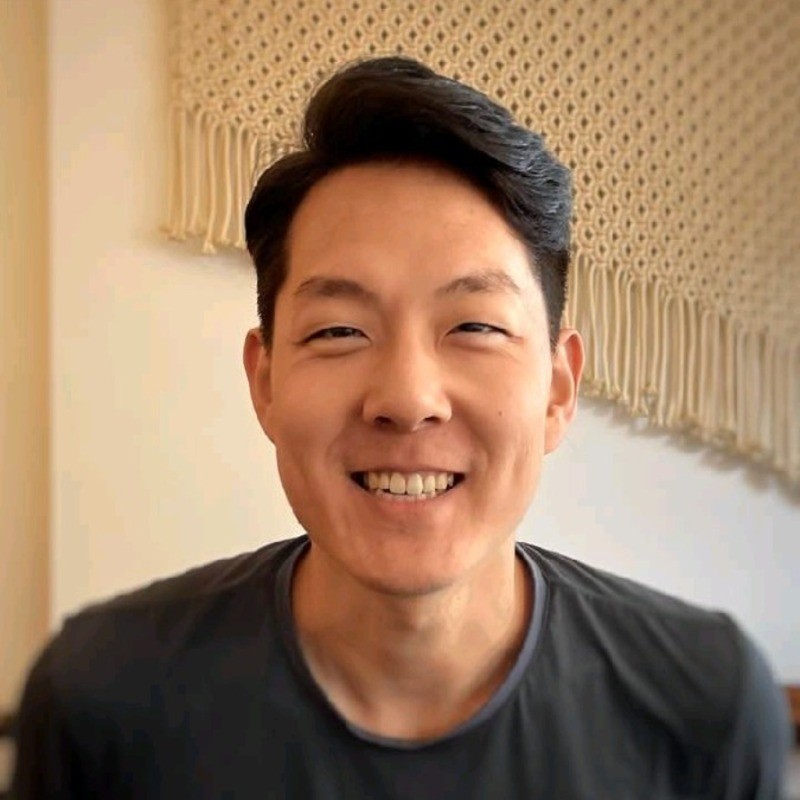
Jin-Ho Lee

Bioinformatics · Data Science

DE

Jin-Ho Lee

// one source of truth — pdf · web · json · jsonld · text

name: Jin-Ho Lee
headline: Bioinformatics · Data Science
roots: [cancer-genomics, HLA-typing, neoantigens]
stack: [NGS, TensorFlow, Python (Expert), GCP]
publications: 15  # first / shared-first author
tagline: >-
  Data scientist with cancer-genomics roots — HLA typing & neoantigen discovery on real-patient data, production ML on GCP, 10+ publications.
 

Profile

Jin-Ho Lee

Jin-Ho Lee is a bioinformatics and data science professional in Mannheim, Germany. He builds in-silico pipelines for HLA typing and neoantigen discovery from cancer-patient NGS and RNA-Seq data, and ships production machine learning on Google Cloud. He holds an M.Sc. from Heidelberg University and has 10+ peer-reviewed publications.

Data scientist with cancer-genomics roots — HLA typing & neoantigen discovery on real-patient data, production ML on GCP, 10+ publications.

Data scientist with deep roots in cancer genomics. Engineered in-silico pipelines for HLA typing and neoantigen discovery from real-patient NGS and RNA-Seq data, grounded in wet-lab training and pipeline development at DKFZ, NCT, FZ Jülich, KIP, and SNU. A parallel line of experimental-biophysics research produced 10+ peer-reviewed papers — first- and shared-first author — in super-resolution microscopy of DNA-damage repair and chromatin.

Now applying that rigor in industry: architected the migration of 1,000+ analytical processes to Google Cloud, shipped BigQueryML models for anti-financial-crime & KYC, and coached 100+ specialists in Python, SQL & ML; secured third-party funding and supervised 10+ students.

Experience

ML/AI Engineer & Open-Source Developer · Independent / Self-Directed

Aug 2025 – present

  • Agentic AI: Built end-to-end LLM agent systems — tool use, planning, routing, multi-agent orchestration, and persistent memory — and shipped open-source Claude Code tooling.
  • Computer Vision: Trained skeleton-based action-recognition models for badminton stroke classification from video — full pipeline from frame labeling through training to evaluation (PyTorch, MediaPipe). D2
  • Bioinformatics: Released a reproducible Snakemake splice-neoepitope discovery pipeline with AlphaFold2/OpenFold structural validation. L5

Consultant, Lead Business Functional Analyst · Cintellic / International Bank

May 2024 – Jul 2025

  • Scale: Architected the migration of 1,000+ analytical processes to Google Cloud. C2
  • AI in Production: Developed BigQueryML models for anti-financial crime & KYC. C1
  • Stakeholder Lead: Bridged technical data engineering with business requirements for high-stakes banking. C1C2

Data Science Trainee, Associate & Coach · neuefische GmbH

Feb 2023 – Apr 2024

  • Coaching: Instructed 100+ specialists in Python, SQL, and ML lifecycles. D3
  • ML Development: Independently engineered a Real-Time ASL Recognition prototype using LSTMs, MediaPipe, and TensorFlow. D1

Doctoral & Post-Graduate Researcher · FZ Jülich / KIP / NCT / SNU / DKFZ

Apr 2014 – Jul 2022

  • Genomics & Immunotherapy: Engineered in silico pipelines for HLA Typing and Neoantigen Discovery from cancer-patient NGS and RNA-Seq splice-junction data; validated SNV calls against gold-standard sequencing in clinical colorectal-cancer cohorts (NCT/DKFZ). L1L2
  • Biophysics & Imaging: Managed end-to-end Super-Resolution Microscopy projects — from wet-lab research to spatial point-pattern data analysis (MATLAB/Python) for studying chromatin. L3
  • Neurobiology: Investigated radiation effects on Neural Progenitor Differentiation using 3D cell models and the role of extracellular vesicles. L4

Projects

Life Science

L1

Cancer Neoantigen Discovery – Transcriptome-Wide Splice Analysis

Bioinformatics Research Intern (Seoul National University) · Aug 2015 – Nov 2015

Bioinformatics pipeline for identifying novel immunotherapy targets derived from aberrant alternative splicing in RNA-Seq data.

Details
  • Developed a discovery pipeline to identify tumor-specific splice junctions across large-scale cancer datasets.
  • Mapped the epitope landscape by predicting high-affinity MHC-I binding peptides from non-canonical transcripts.
  • Validated the predictive model by cross-referencing findings with high-impact transcriptomic studies.
  • Evaluated synergistic strategies for co-targeting mutation-derived and splice-derived neoantigens.

Demonstrated that alternative splicing is a viable source for high-affinity epitopes, expanding target discovery beyond traditional somatic mutations.

PythonRMapSpliceRNA-SeqTCGA DatasetsMHC-I Prediction Tools

L2

Personalized Immunotherapy – High-Throughput HLA Typing Pipeline

Bioinformatics Bachelor Thesis Student (NCT Heidelberg) · Apr 2014 – May 2014

Bioinformatics workflow for identifying patient-specific cancer targets and automating HLA genotyping from Next-Generation Sequencing (NGS) data.

Details
  • Developed an in silico genotyping pipeline to extract HLA alleles directly from Whole-Exome Sequencing (WXS) data.
  • Implemented predictive modeling using ANNs (NetMHCPan) to screen missense mutations for MHC-I binding affinity.
  • Engineered a consensus methodology integrating multiple HLA typing algorithms to resolve sequence ambiguities and improve diagnostic reliability.
  • Validated the pipeline by analyzing binding specificities across HLA alleles to mitigate genotyping errors in vaccine design.

Demonstrated the feasibility of a fully computational approach to neoantigen discovery, significantly reducing costs and lead times compared to traditional PCR-based clinical assays.

PythonRHLAMinerSeq2HLANetMHCPan (Neural Networks)Shell Scripting

L3

Experimental Biophysics — Chromatin Nano-Architecture & DNA Repair

Graduate Researcher / Master's Candidate · Feb 2017 – Aug 2018

Advanced research utilizing super-resolution microscopy and computational analysis to investigate DNA repair mechanisms and chromatin nano-architecture.

Details
  • Experimental Design: Developed and executed research projects focused on DNA repair pathways and super-resolution imaging of chromatin structures.
  • Data Analysis & Modeling: Leveraged MATLAB, R, and Python to process complex imaging data and perform quantitative analysis of nano-scale structures.
  • Academic Leadership: Managed international research collaborations and mentored several Bachelor and Master's students throughout the project lifecycle.

Published research findings in multiple peer-reviewed journals and secured third-party funding for continued scientific investigations.

MATLABLinuxRPythonCOMBO-FISHSPDMDBSCAN

L4

Neural Stem Cell Research – Radiation Effects on 3D Differentiation

Doctoral Researcher (RWTH Aachen, Forschungszentrum Jülich) · Sep 2018 – Jul 2022

Scientific research project investigating the impact of ionizing radiation and extracellular vesicles on human neural progenitor cell differentiation.

Details
  • Experimental Design: Developed and executed a multi-year research project at the intersection of radiation biology and neuroscience.
  • Leadership & Mentoring: Supervised and guided students, junior researchers, and technical staff through complex laboratory workflows.
  • Scientific Communication: Secured third-party funding, established research collaborations, and published findings in peer-reviewed journals.

Successfully identified new insights into neural radiation responses and presented results at international scientific conferences.

3D Cell Culture ModelingqPCRFluorescence MicroscopyFACSBiochemistryImageJMS Office

L5

Splice Neoepitope Pipeline – Reproducible Snakemake Workflow

Author and Maintainer (Open Source) · Mar 2026 – present

Modernised, open-source reimplementation of the 2015 SNU splice-junction–based neoepitope discovery work as a reproducible Snakemake pipeline with optional structural validation.

Read the write-up →

Details
  • Re-engineered the original SNU pipeline as a fully reproducible Snakemake 8.x workflow with per-rule Conda environments — installable without manual dependency management; run locally and on GCP GPU VMs, and executor-portable to a SLURM cluster by design (per-rule resources + Conda) — a config swap, not a rewrite.
  • Implemented tumor-vs-matched-normal junction filtering against GENCODE annotation, classifying junctions as annotated, normal_shared, or tumor_exclusive.
  • Integrated patient-specific HLA typing (OptiType) and MHC-I peptide presentation prediction (MHCflurry 2.x Class1PresentationPredictor) for end-to-end neoepitope candidate ranking.
  • Added optional TCR-pMHC ternary complex structural validation via TCRdock (AlphaFold v2 backend) on Google Cloud GPU; predicted complexes rendered as interactive Mol* 3D viewer in the report.
  • MIT-licensed, public on GitHub (Jin-HoMLee/splice-neoepitope-pipeline).

Snakemake pipeline: end-to-end neoepitope discovery from RNA-Seq FASTQ to computationally modeled TCR-pMHC complex structure — patient-specific HLA alleles, tumor-exclusive junctions.

Snakemake 8.xCondaPython 3.11HISAT2 / STAROptiTypeMHCflurry 2.xTCRdock / AlphaFold v2bedtoolsGoogle Cloud GPUMol*

Data Science

D1

SignMeUp – Real-Time American Sign Language (ASL) Recognition

Project Manager / Data Scientist (neuefische GmbH) · Sep 2023 – Dec 2023

Machine learning pipeline and application prototype for real-time ASL gesture recognition, designed for integration into a digital sign language learning app.

Details
  • Project Leadership: Defined project scope, managed team communication, and delivered stakeholder presentations.
  • Model Development: Designed and optimized an LSTM neural network to classify temporal sequences of ASL gestures.
  • Data Engineering: Developed a pipeline for real-time landmark extraction, feature engineering, and data cleaning from video feeds.

Delivered a functional prototype for real-time inference, enabling instant feedback for sign language learners.

PythonTensorFlow (Keras)LSTMMediaPipeOpenCVGoogle CloudScikit-LearnMLflow

D2

Shuttle Insights – AI Badminton Match Analysis

Data Scientist / Developer · Jan 2024 – Apr 2024

Computer vision system for analyzing badminton gameplay from video recordings.

Details
  • Developed a computer vision pipeline for detecting players and tracking shuttle trajectories.
  • Implemented pose estimation models to analyze player movement patterns.
  • Extracted gameplay metrics such as rally duration and player positioning.

Functional prototype capable of generating match statistics and movement analytics.

PythonOpenCVTensorFlowMediaPipe

D3

Data Science Bootcamp Program

Data Science Coach (neuefische GmbH) · Sep 2023 – Apr 2024

Professional training program for transitioning participants into data science careers.

Details
  • Delivered lectures on Python, machine learning, SQL, and data visualization.
  • Mentored students throughout the data science lifecycle.
  • Supervised capstone projects and technical presentations.
  • Developed and improved training materials.

Successfully supported multiple cohorts in developing industry-ready data science skills.

PythonPandasNumPyScikit-LearnTensorFlowSQLDockerdbtGoogle Cloud

Consulting

C1

Anti-Financial Crime – Know Your Customer (KYC) Platform

Lead Business Functional Analyst (Cintellic GmbH) · Aug 2024 – Jul 2025

Cloud migration and analytics environment development for financial crime detection at a large international bank.

Details
  • Expanded the Python-based analytics environment in Google Cloud.
  • Migrated legacy SAS reporting workflows to Python-based pipelines.
  • Explored BI capabilities using Looker and prepared the data model.
  • Conducted stakeholder management and requirements analysis.
  • Supported AML risk analysis through ad-hoc investigations of customer relationships.

Enabled transition of legacy reporting processes into a scalable cloud-based analytics environment.

Google Cloud PlatformBigQueryPythonSASLooker

C2

Hyper-Personalized Digital Customer Platform

Lead Business Functional Analyst (Cintellic GmbH) · May 2024 – Oct 2024

Data model development supporting hyper-personalized customer communication during migration of customer data infrastructure to Google Cloud.

Details
  • Conducted requirements analysis with business and analytics stakeholders.
  • Mapped data tables from legacy systems to the new cloud architecture.
  • Supported integration of over 1000 analytical processes into the cloud platform.

Enabled scalable data infrastructure for personalized marketing initiatives.

Google Cloud PlatformBigQuerySQLPython

Publications

  • First author: 6
  • Shared first: 3
  • Co-author: 6
  • Σ 15 publications
015 2017201820192020202120222023202420252026
Cumulative over time · 15 publications

336 citations across 11 indexed works · most-cited 59 · Crossref, indicative

11 peer-reviewed publications (2 first-author, 3 shared-first, 6 co-author) and 3 first-author conference contributions, 2017–2021, in radiation biophysics & super-resolution DNA-repair imaging.

Full list & metrics: orcid.org/0009-0001-8784-1771 Google Scholar

Awards & Certifications

Google Cloud Certified - Associate Cloud Engineer · 2024

Google Cloud

Issued Dec 2024, valid through Dec 2027.

DeGBS Poster Award · 2021

Deutsche Gesellschaft für Biologische Strahlenforschung

“Most Patient-Centric Solution” Award · 2018

{Life Science} meets IT Hackathon, Mannheim

DAAD PROMOS Scholarship · 2015

DAAD

Funded the Seoul National University research internship (Bio & Health Informatics Lab) on splice-junction neoantigen discovery.

FAQ

Who is Jin-Ho Lee?

Jin-Ho Lee is a bioinformatics and data science professional based in Mannheim, Germany. He engineers in-silico pipelines for HLA typing and neoantigen discovery from cancer-patient NGS and RNA-Seq data, and builds production machine learning on Google Cloud. He holds an M.Sc. in Molecular Biotechnology from Heidelberg University and has 10+ peer-reviewed publications.

What is Jin-Ho Lee's professional background?

Jin-Ho Lee spent eight years in doctoral and post-graduate research across FZ Jülich, KIP, NCT, SNU and DKFZ, working on cancer genomics and super-resolution microscopy. He then moved to industry as a data science coach at neuefische and a consultant and lead business functional analyst for an international bank, and now works independently on ML/AI engineering and open-source tooling.

What technical skills does Jin-Ho Lee have?

Jin-Ho Lee works in Python, SQL and R, with machine learning in PyTorch and TensorFlow, bioinformatics pipelines in Snakemake, and cloud data engineering on Google Cloud including BigQuery and BigQueryML. His domain expertise spans cancer genomics, NGS and RNA-Seq analysis, HLA typing, neoantigen discovery, and spatial point-pattern analysis.

What has Jin-Ho Lee published?

Jin-Ho Lee has 10+ peer-reviewed publications, including first-author and shared-first-author papers, in radiation biophysics and super-resolution imaging of DNA-damage repair and chromatin architecture. The full list with citation counts is available via his ORCID record (0009-0001-8784-1771) and Google Scholar profile.

What is Jin-Ho Lee working on now?

Jin-Ho Lee currently works independently on agentic AI systems - LLM agents with tool use, planning, routing, multi-agent orchestration and persistent memory - alongside open-source Claude Code tooling, skeleton-based action recognition in computer vision, and a reproducible Snakemake splice-neoepitope discovery pipeline with AlphaFold2 structural validation.

Is Jin-Ho Lee available for new opportunities?

Jin-Ho Lee's stated availability: open to roles in bioinformatics, computational biology and data science, based in Mannheim, Germany. The fastest way to reach him is the contact form on this site or the digital twin chat, which answers detailed questions about his experience and can pass on a message.